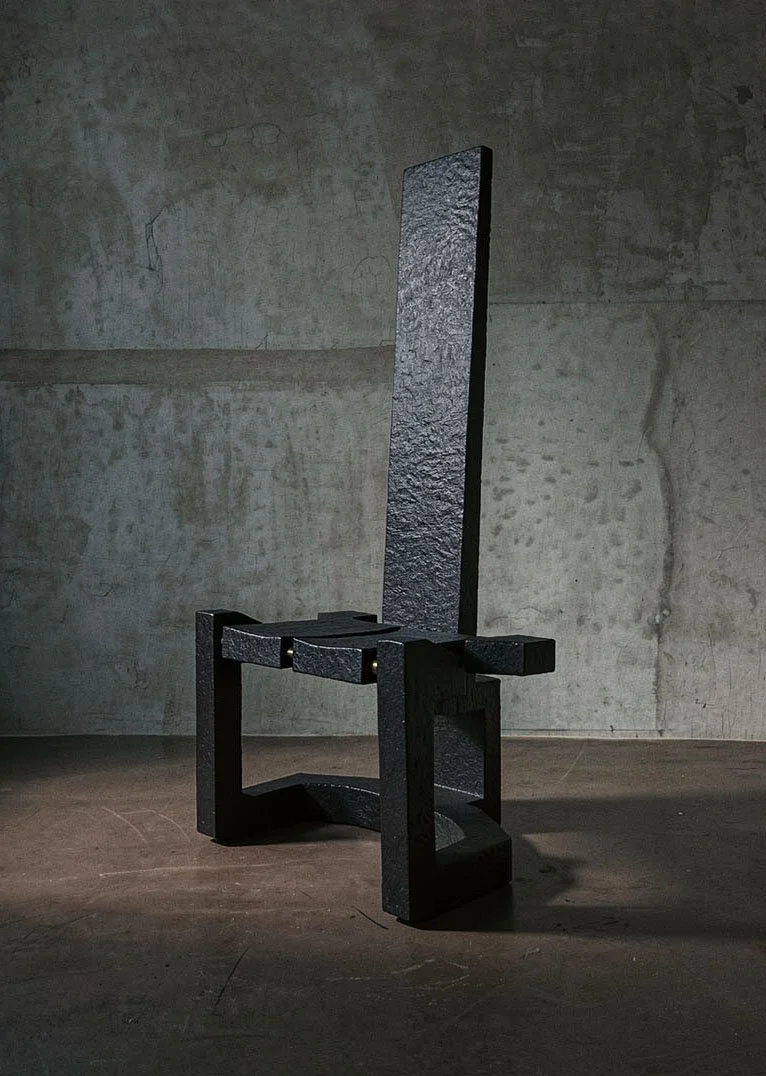
ITSMO - THRONE - CHAIR
by LAS ÁNIMAS, Spain, 2026
SIZE: 53 x 57 x 141 cm // 20.87 × 22.44 × 55.51 inches.
MATERIAL: wood, brass, hand applied paper pulp, pigmented
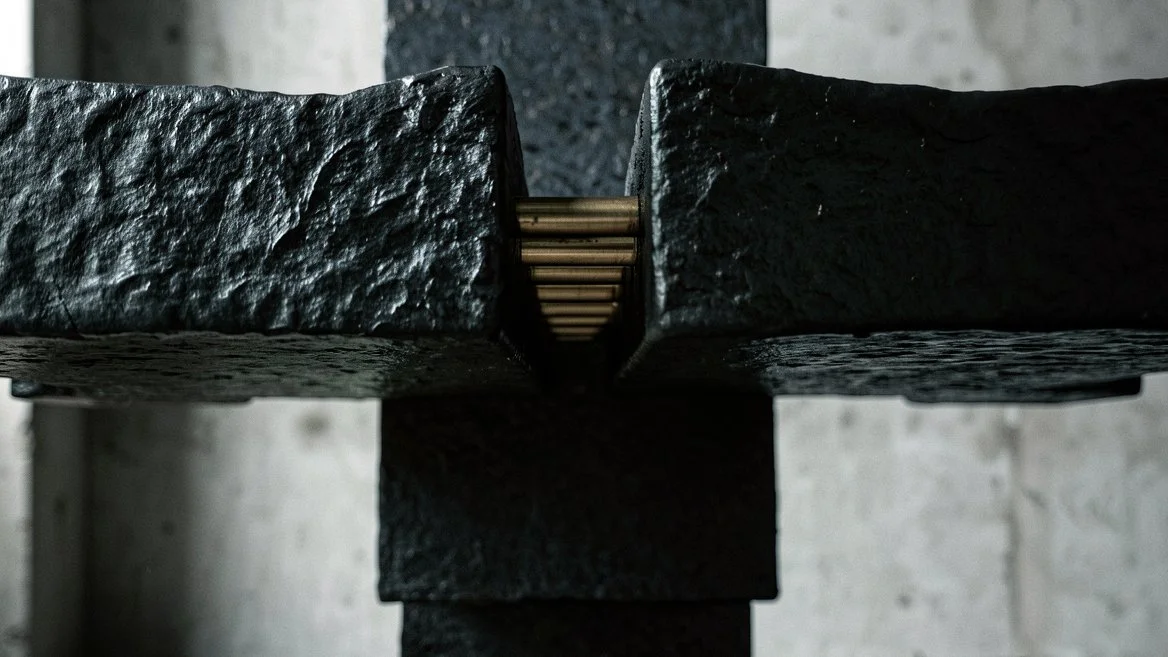
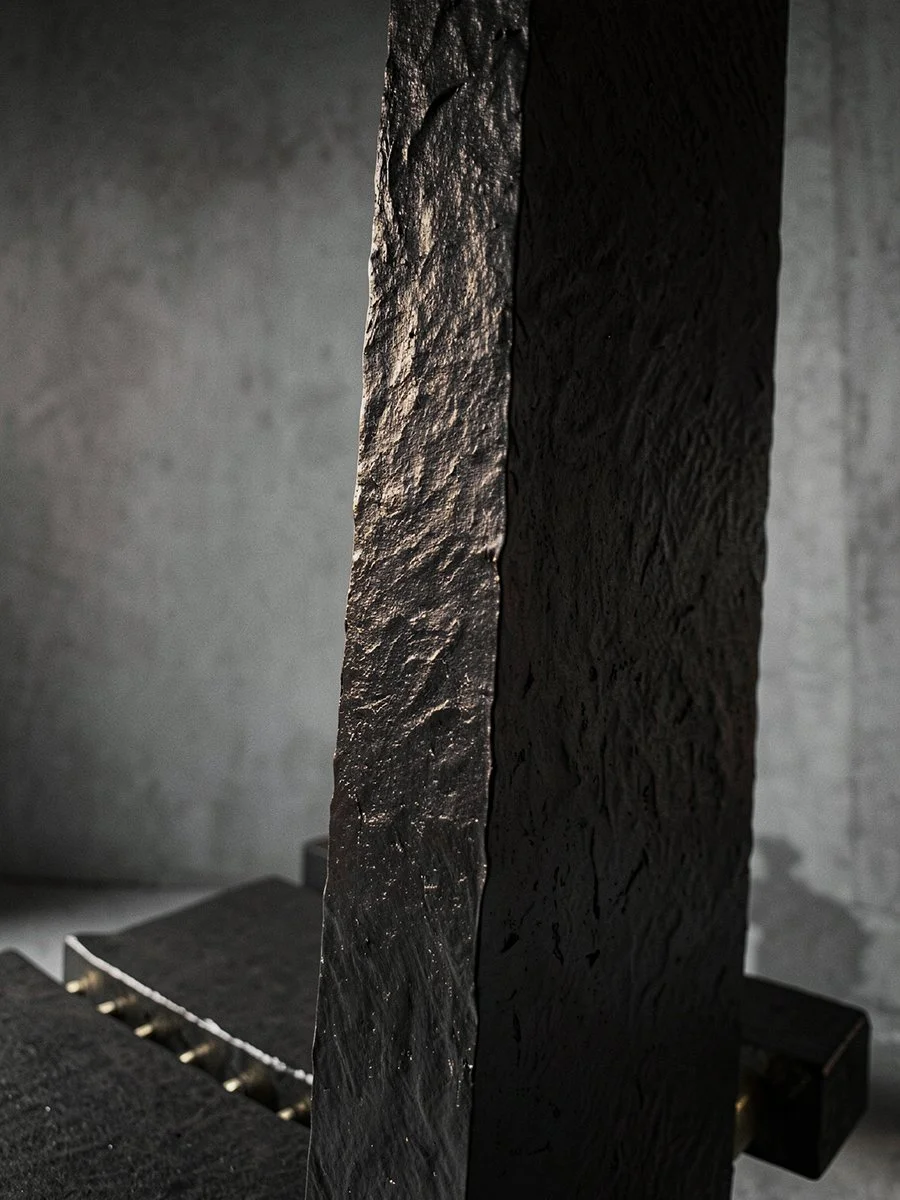
ISTMO is a piece made of assembled wood and brass. The surface is created with pigmented paper pulp, applied by hand to form a dense texture that produces an irregular and deep surface, altering the way the work is perceived and read.
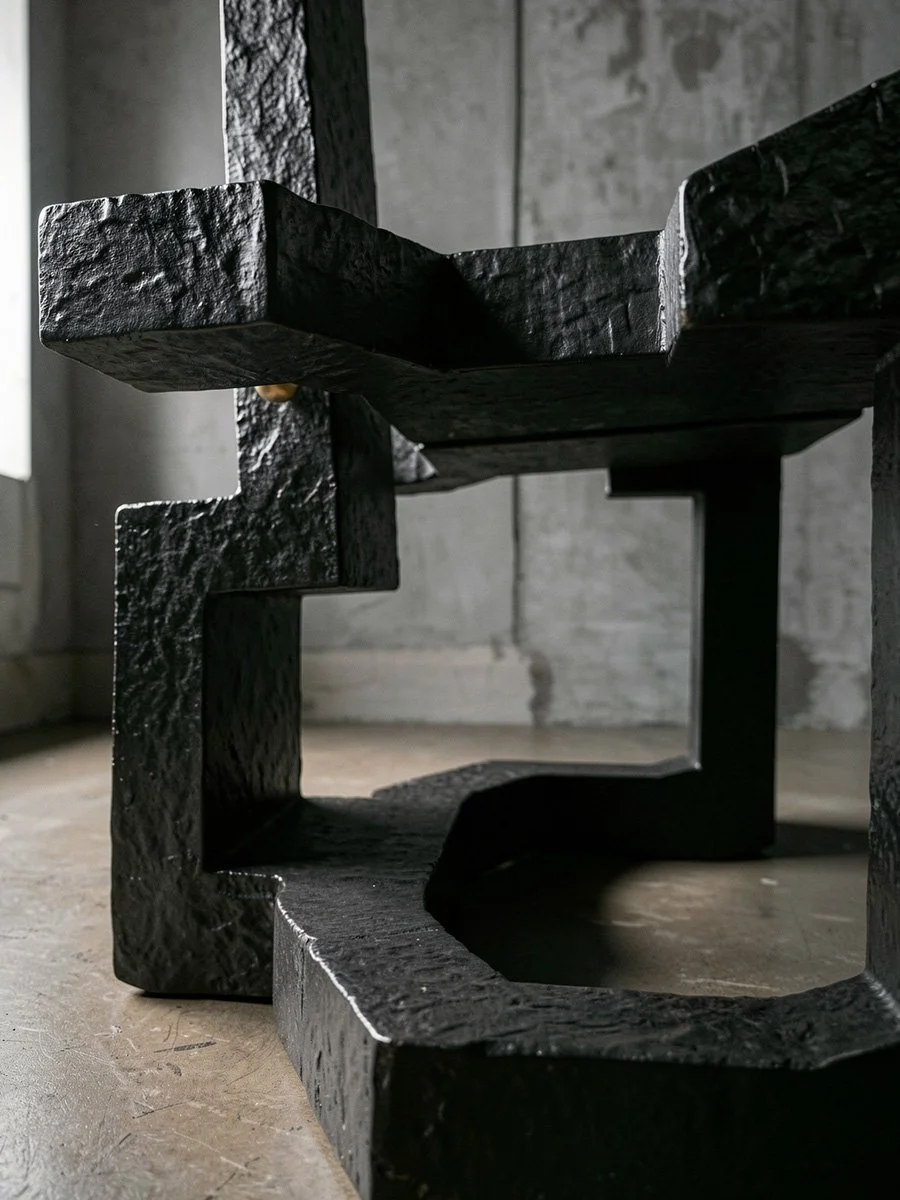
The piece is constructed from solid blocks that create an architecture of bodies and structural voids that organize its balance.ISTMO stands at the point where functional object and sculpture begin to blur. The piece revisits some of the questions that shaped the early investigations of Las Ánimas, particularly those related to the series ‘Moloch’, in which the aim was to give symbolic weight to form and to transform space through works that acquired a strong presence.
In this series, initiated with this first seat, the question of its origin and its time remains open, through its form, the process, the material, and the research that take place within the Las Ánimas studio.
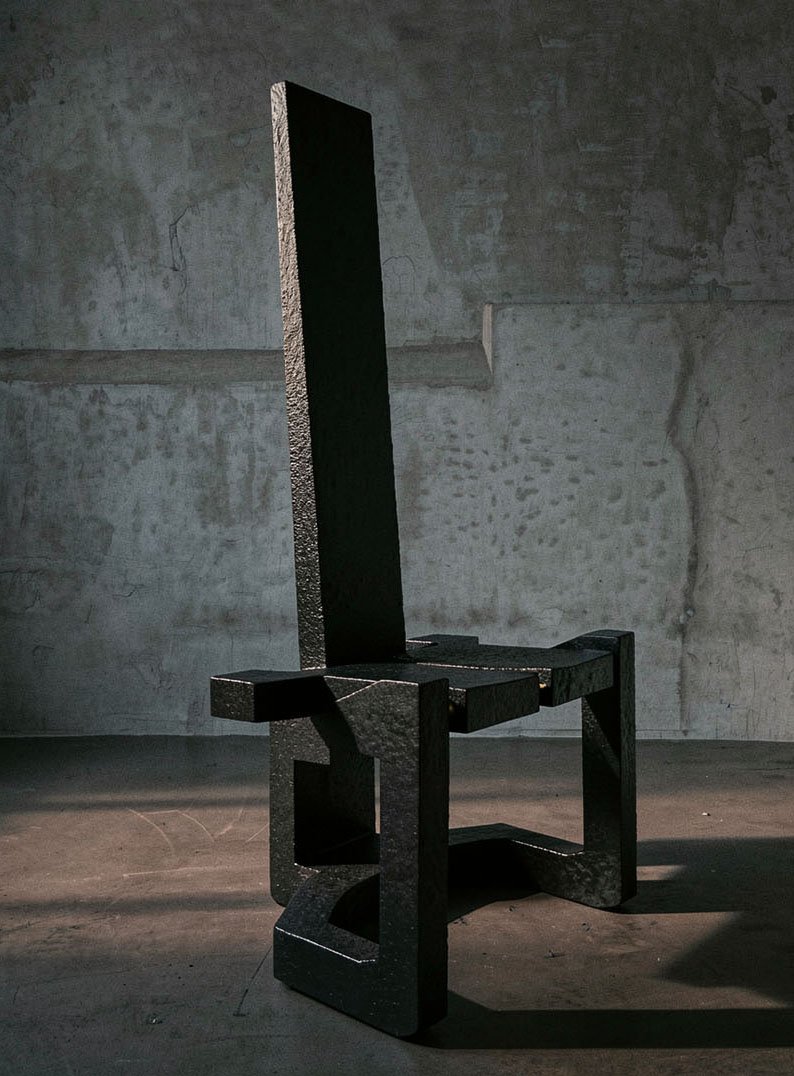
This piece emerges as a deliberate return to one of the formal territories that have shaped the development of the aesthetics and production language of Las Ánimas.
Within it, a structural logic reappears that stems from the studio’s earliest investigations into the object with the series Moloch in 2016, where the works were constructed from blocks, structural tensions and volumes that seemed to support one another through a direct, almost primitive balance.
Here, however, this constructive interest is reconsidered from a different perspective. Ten years later, the studio revisits materials and aesthetics: geometry remains essential but becomes more open, while the materials introduce a new plasticity into the work.
The proportion of the volumes, the way the elements interlock with one another and the scale, with monumental nuances, shift its reading toward a sculptural field in which the studio has been working in recent years.
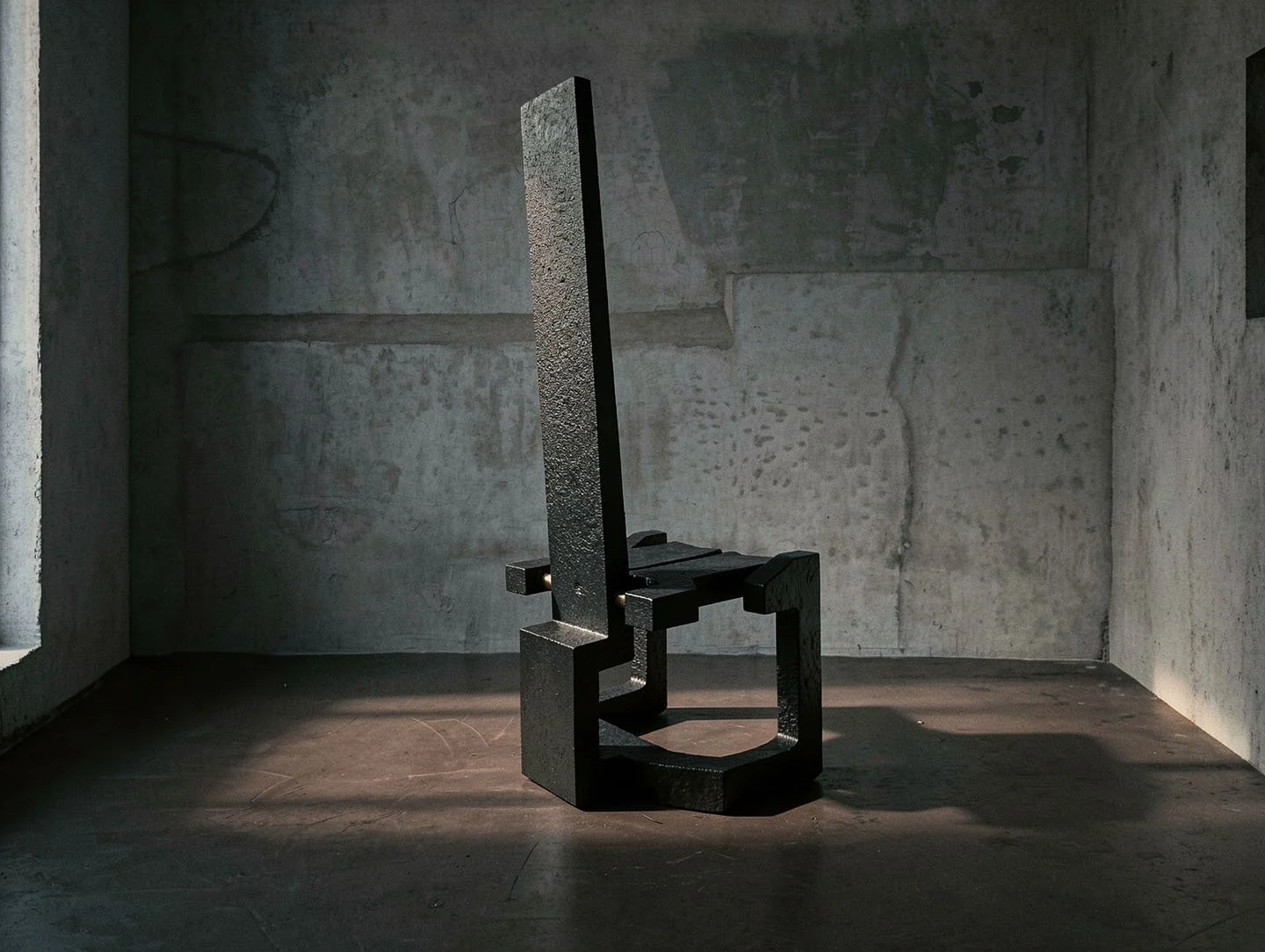
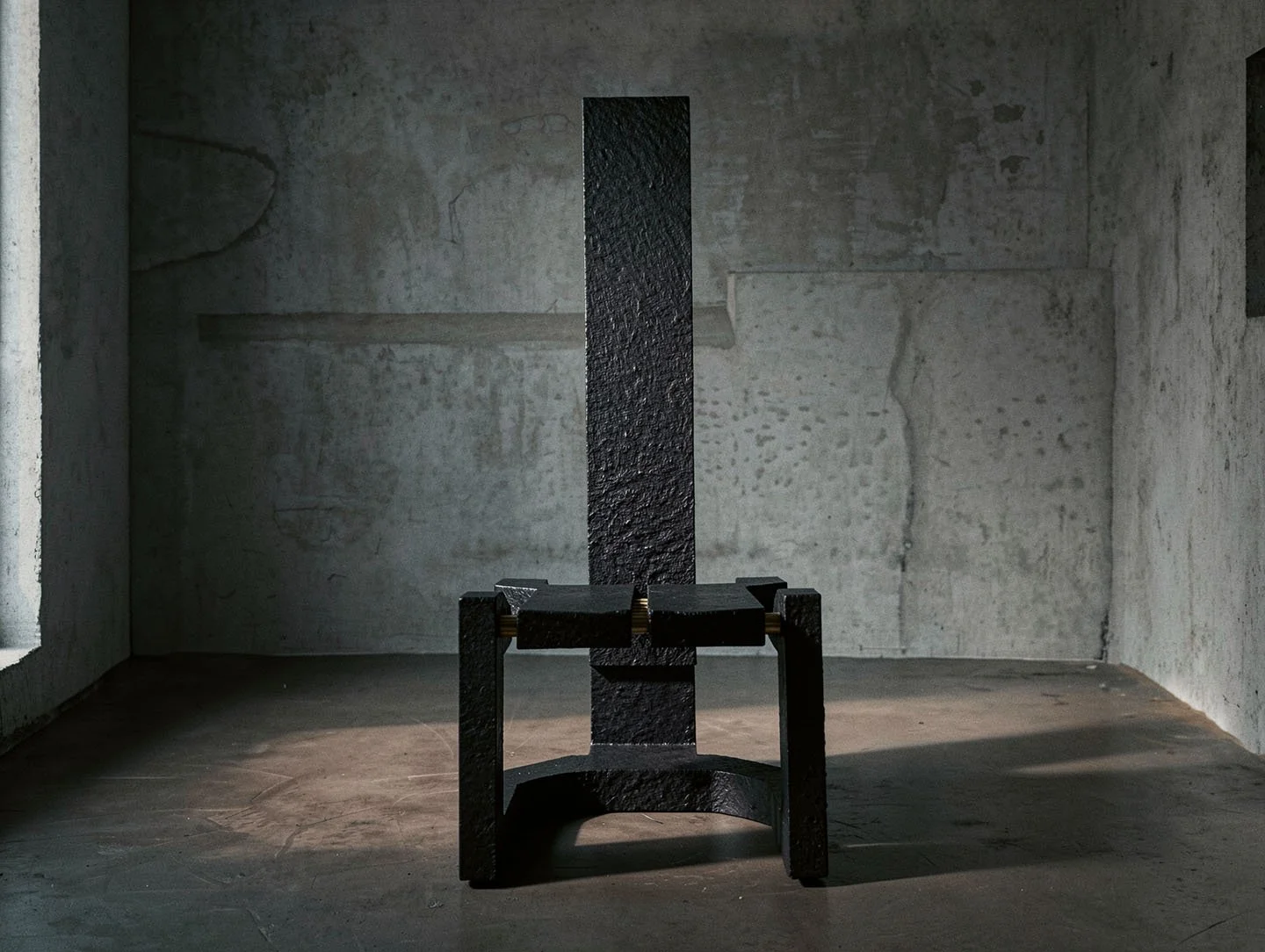
The piece rests on a base that defines the lower perimeter of the object. From this initial gesture, the structure rises and is shaped through a system of planes and volumes that stem from the simplicity of archaic forms. The backrest is a vertical plane that seeks to connect with monolithic forms and functions as a connecting and evocative element, recalling ornamental pieces of a spiritual nature.
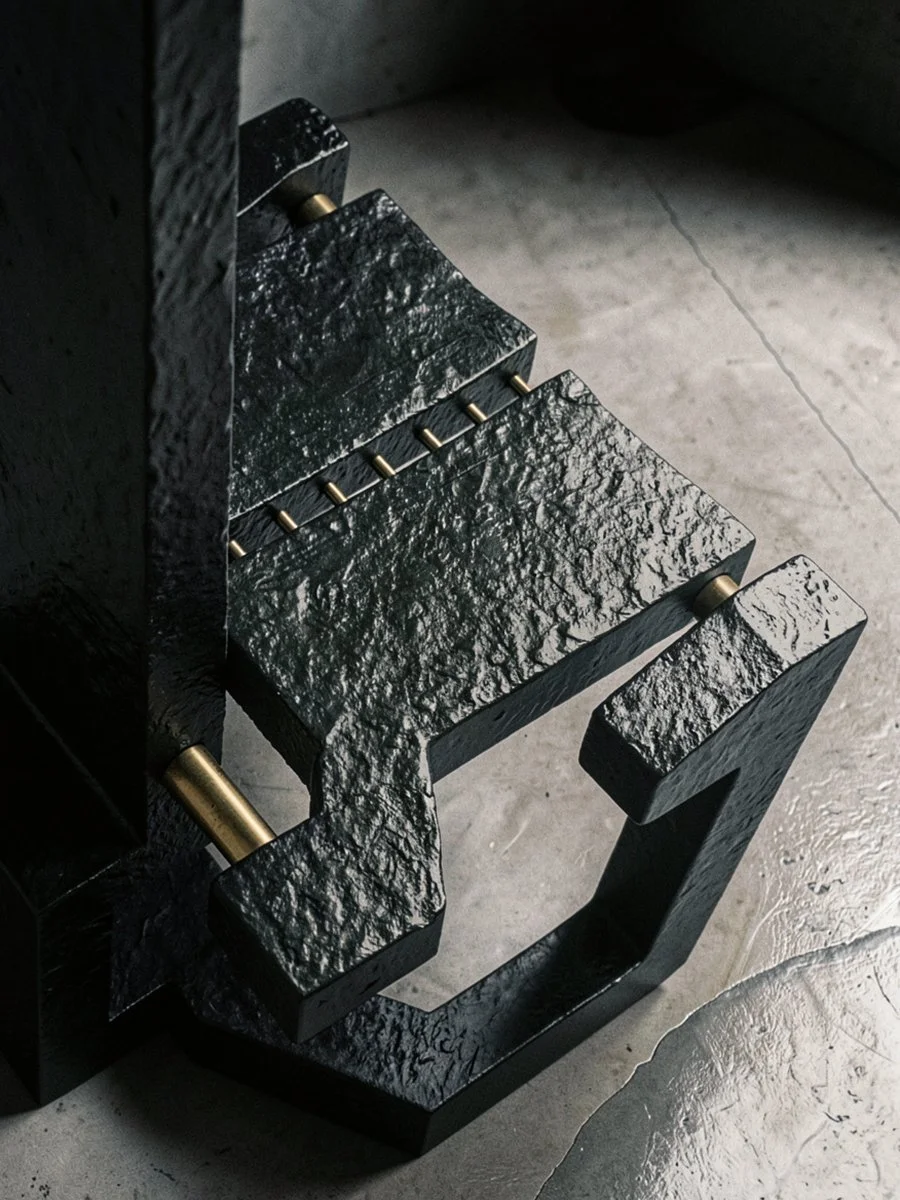
In the seat appears one of the most singular elements of the project. The connection between the seat and the main structure is achieved through brass tubes. These metal components introduce a technical and constructive dimension that contrasts with the almost primitive character of the volume created with the wood.
Brass reintroduces an element widely used by the studio in its early years and that functions as a visible system of articulation.
This coexistence between the archaic and the technical is one of the central aspects of the piece. The wood, worked until it acquires a massive and almost stone-like appearance, refers to an ancestral sculptural tradition, while the metallic elements introduce a logic closer to engineering or contemporary joinery.